
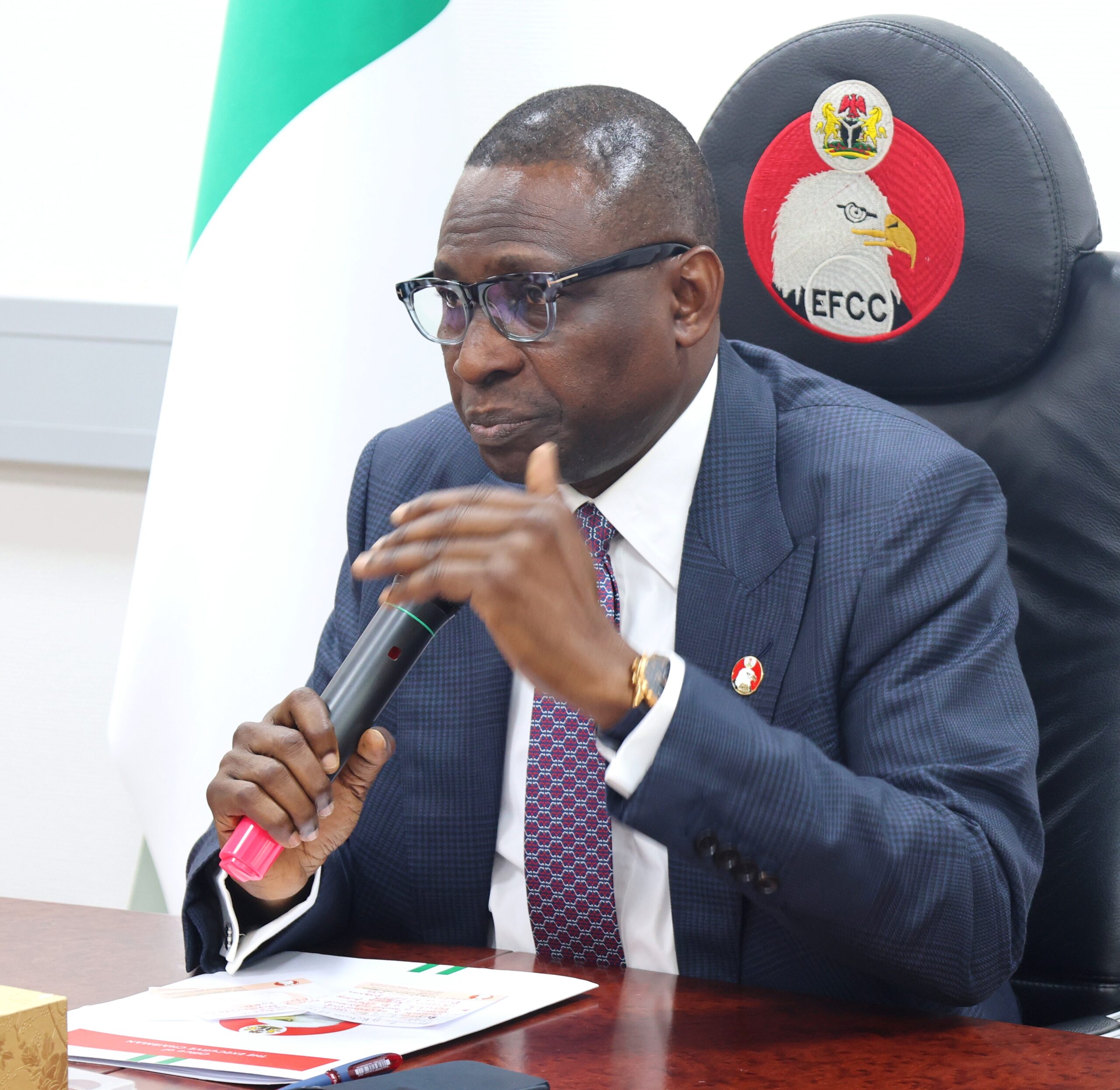
The Executive Chairman of the Economic and Financial Crimes Commission (EFCC), Mr Ola Olukoyede, has called for collective efforts by all stakeholders in the anti-corruption sector to ensure the speedy resolution of corruption cases in court.
He made the call in Abuja on Thursday, November 27, 2026, at the public presentation of a report titled “Sample High-Profile Corruption Cases as at October 2026,” organised by the Centre for Social Justice (CSJ).
Represented by his Chief of Staff, Commander of the EFCC, CE Michael Nzekwe, Olukoyede stressed that only the collective efforts of all stakeholders in the justice delivery system could ensure the speedy resolution of cases in Nigerian courts.
“Our objective must be a criminal justice system in which investigations are diligent, prosecutions are credible, trials are conducted without avoidable delay, constitutional rights are protected and judgments command public confidence.
“At the Commission, we remain committed to working with the judiciary, legislature, legal profession, civil society and other stakeholders towards achieving this objective,” he said.
Olukoyede added that prolonged criminal trials were rarely attributable to a single institution or circumstance.
“Repeated adjournments, interlocutory proceedings, difficulties in securing witnesses, delays in obtaining documentary evidence, congested court schedules, and the reassignment of part-heard cases all contribute to the problem,” he said.
He assured that the EFCC would continue to tackle economic and financial crimes without fear or favour, guided by evidence, professionalism and respect for the rule of law.
He noted that prolonged litigation increased the costs of both prosecution and defence, while the resulting uncertainty took a heavy toll on defendants, victims and institutions alike.
To strengthen its investigations and adequately prepare for its cases, Olukoyede disclosed that the Commission had embraced internal reforms, stressing that investigations must be thorough, charges carefully prepared, evidence properly preserved and witnesses adequately prepared to give truthful testimony.
“We must continue to improve cooperation between investigators and prosecutors from the earliest stages of complex investigations,” he said.
He noted that the EFCC was also investing resources and manpower in digitalisation, forensic capabilities and professional development to improve the quality of investigations and reduce avoidable delays.
In his welcome address, the Director of the Centre for Social Justice (CSJ), Eze Onyekpere, explained that the organisation had implemented the project titled “Improving the Effectiveness of Anti-Corruption Processes and Reforms in Nigeria,” with the support of the European Union, IDEAS and the Rule of Law and Anti-Corruption (RoLAC 2) project.
He stated that the initiative aimed to improve the effectiveness of anti-corruption laws, policies, interventions and strategies, while entrenching reforms at both national and subnational levels, ultimately leading to greater compliance with anti-corruption laws.
Other dignitaries present at the event included representatives of the Code of Conduct Bureau (CCB), the Code of Conduct Tribunal (CCT), the Nigerian Law Reform Commission (NLRC), the Nigerian Bar Association (NBA), civil society organisations, the media and other stakeholders in the anti-corruption sector.
