
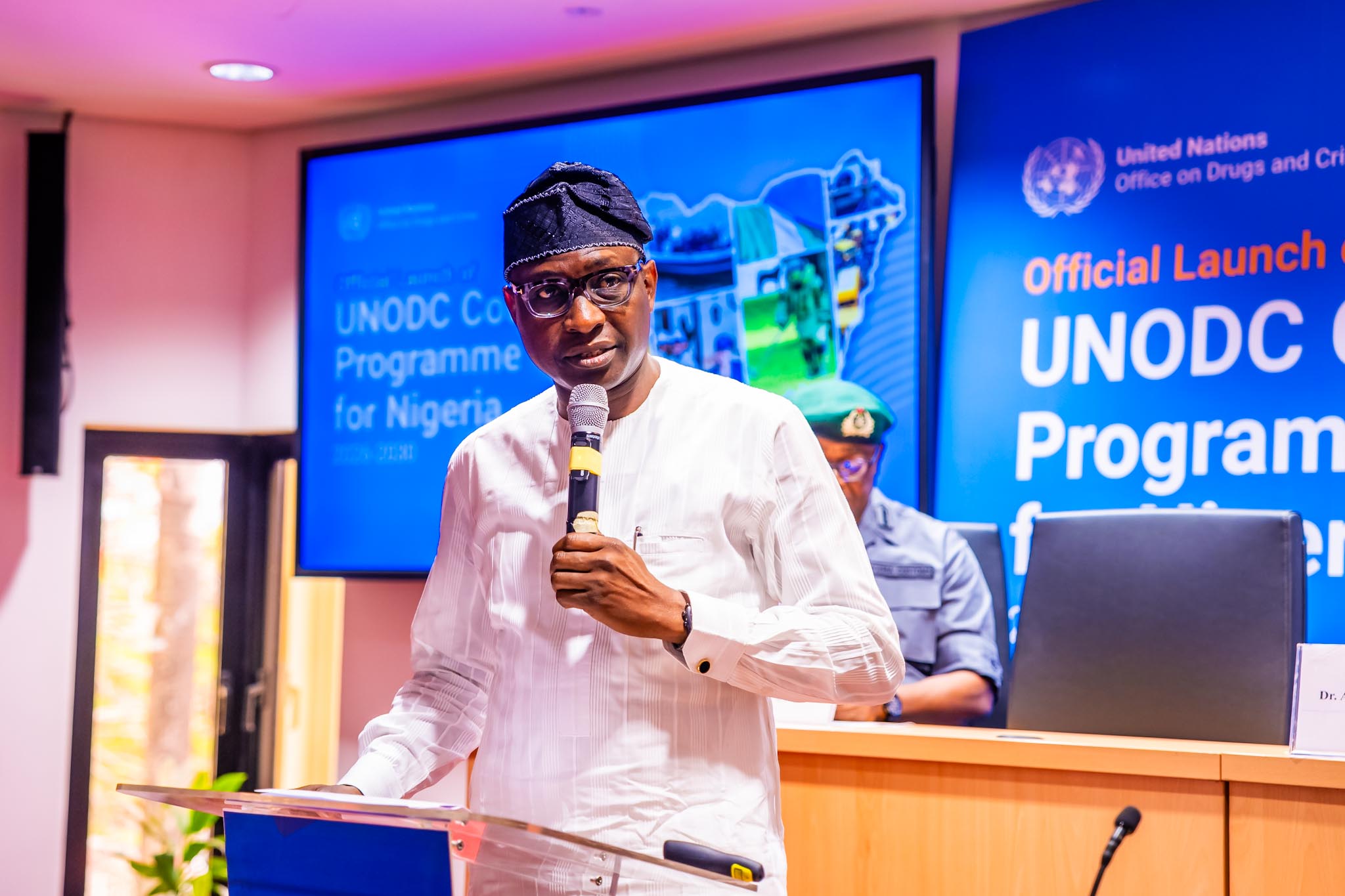
The Executive Chairman of the Economic and Financial Crimes Commission (EFCC), Mr. Ola Olukoyede, has applauded the United Nations Office on Drugs and Crime (UNODC) for its emphasis on tackling corruption and illicit financial flows in its Country Programme for Nigeria 2026–2030.
He gave the commendation in Abuja on Friday, March 27, 2026, while delivering a goodwill message at the launch of the programme.
According to him, corruption remains a grave threat to national and global development, and every effort geared toward combating it is commendable.
“For the EFCC, the programme’s emphasis on combating corruption and illicit financial flows is particularly significant. Corruption continues to impose enormous economic and social costs on our country. Hence, the imperative for sustained action to turn the tide,” he said.
He noted that the launch of the programme came at a critical moment when Nigeria and the rest of the world continue to grapple with evolving threats of transnational organized crime, corruption, illicit financial flows, terrorism, and cyber-enabled offences.
He further stated that combating corruption has become imperative, as criminal networks now exploit advances in technology, global financial systems, and governance gaps to move illicit proceeds across jurisdictions with alarming speed.
“Confronting these challenges requires coordinated national responses, strong institutions, and sustained international cooperation,” he added.
Olukoyede also appreciated the long-standing relationship and institutional collaboration between the EFCC and UNODC, stressing that the Country Programme for Nigeria 2026–2030 would be impactful due to its focus on capacity development, inter-agency collaboration, and data-driven approaches to addressing organized crime.
He added that the programme aligns with the EFCC’s mandate and its broader commitment to strengthening Nigeria’s anti-corruption framework.
The UNODC noted that the Country Programme is significant due to the strategic importance of Nigeria as Africa’s largest economy and most populous nation, with a projected population of 400 million by 2050. According to the agency, Nigeria holds significant potential to drive positive regional change.
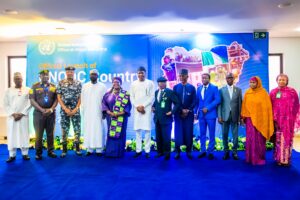
The launch of the programme attracted a large turnout of stakeholders from the judiciary, ministries, departments, and agencies, including the National Judicial Institute (NJI), National Drug Law Enforcement Agency (NDLEA), Nigeria Police Force (NPF), Independent Corrupt Practices and Other Related Offences Commission (ICPC), and the Office of the Director of Public Prosecution of the Federation (DPPF), among others.
